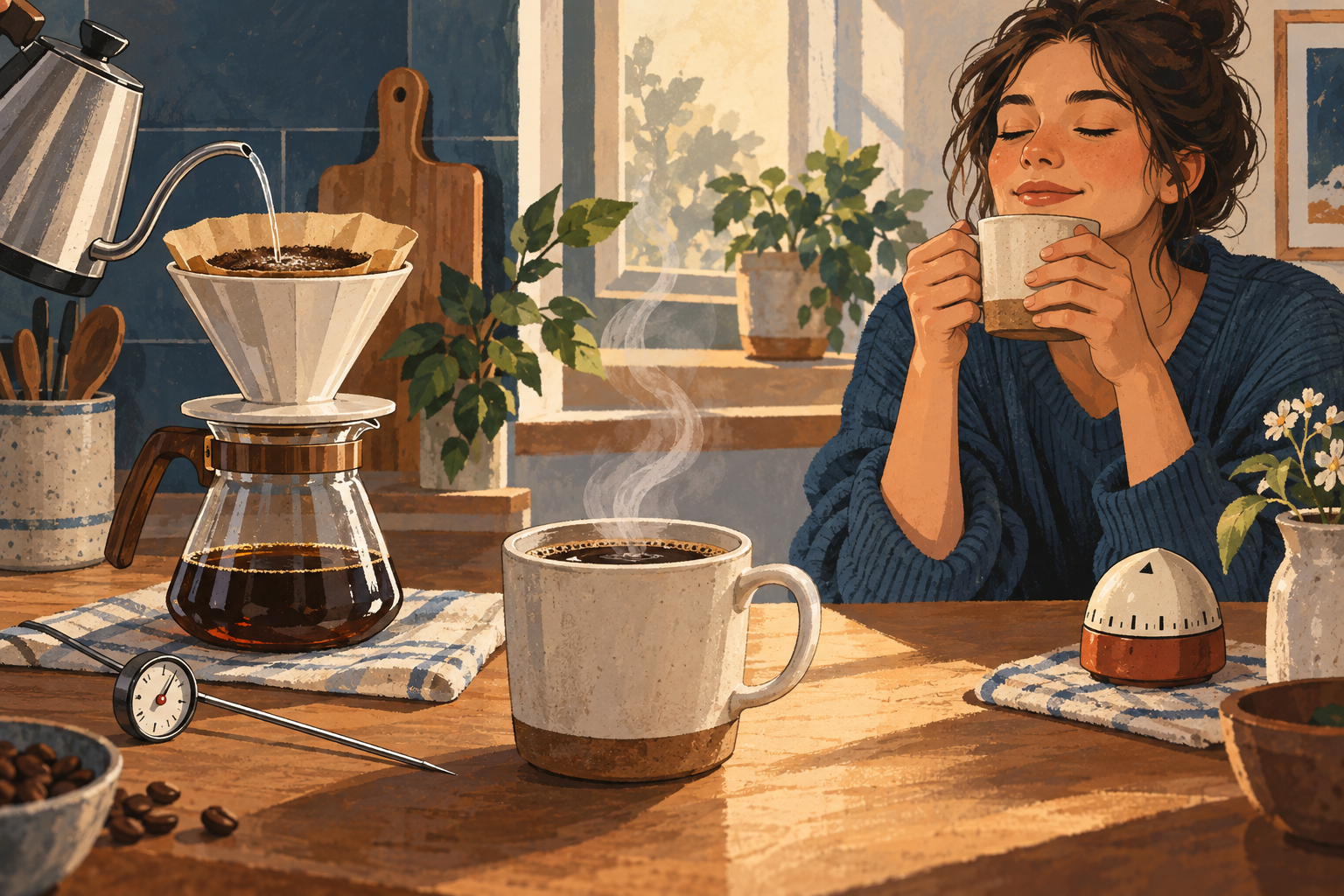
Change brew temperature only when the recurring problem appears to concern the brewed coffee itself. If the coffee tastes good once it reaches a comfortable drinking temperature, leave the brew setting alone and adjust cooling time, cup preparation, or serving routine instead. The practical way to tell is to record two separate temperatures: water during brewing and coffee immediately before the first sip. Keep dose and water constant, note grind and timing, and change only one part of the process on the next run.
Why One Temperature Reading Is Not Enough
A Scientific Reports paper explicitly distinguishes brew temperature from holding, post-pour, and tasting temperatures. In its consumer analysis, coffees were tasted from 56–71°C; acceptance was highest within 58–66°C, while only above 70°C did a majority describe the coffee as too hot. Those findings concern tasting temperature, not a recommended brewer setting. They also describe a studied group rather than an automatic personal target. The useful lesson for home troubleshooting is that the temperature used to prepare coffee and the temperature at which someone evaluates it are separate observations. A single reading cannot stand in for the entire sequence.
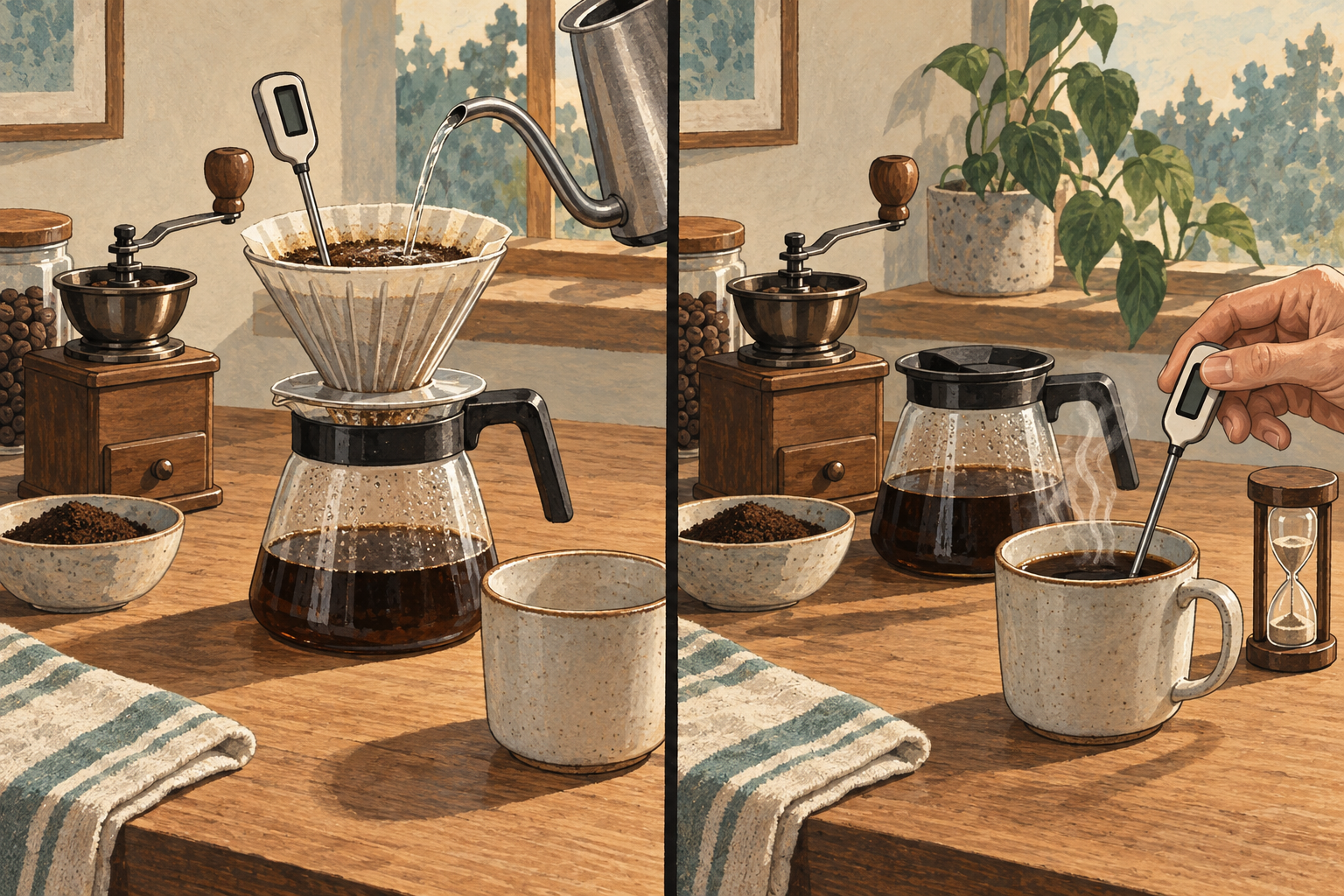
Define each reading before starting. Take the brew-water reading at one safe, repeatable location permitted by the brewer’s instructions. Take the first-sip reading from the poured cup immediately before tasting, and record how long the cup has been sitting. Consistency of method matters more here than chasing an assumed ideal number.
Build a Baseline Without Changing the Coffee
Begin with the recipe already used at home. For two or three baseline brews, keep coffee dose, water quantity, filter, brewer, cup, and intended serving size unchanged. Do not correct anything mid-test. The goal is to document what normally happens before deciding which temperature deserves attention.
- Record the coffee dose and water quantity.
- Record the grind setting without adjusting it between baseline runs.
- Measure brew water at the same safe point each time.
- Note the total brew duration, but do not try to force a target.
- Record whether the cup was preheated, room-temperature, or otherwise prepared.
- Write down first-sip temperature and elapsed time after pouring.
- Describe the problem in plain language before making another change.
Classify the Problem Before Adjusting Anything
Use the baseline notes to place the complaint on one of two tracks. Choose the serving track if the main issue is that the first sip arrives hotter or cooler than preferred, while the coffee becomes satisfactory at a comfortable point. Choose the extraction track if an unwanted flavor remains after the cup reaches the drinker’s preferred temperature and appears again in repeated brews. If both occur, solve serving comfort first, then reassess flavor at a consistent tasting point.
- Serving issue: keep brewing unchanged and test a different wait before the first sip.
- Extraction issue: keep first-sip timing consistent and test one brewing variable.
- Unclear result: repeat the baseline rather than changing several settings together.
When to Test Brew Temperature
The SCA summary describes drip-coffee research using brew temperatures of 87°C, 90°C, and 93°C. Researchers adjusted grind, dose, brew time, or duty cycle so the coffees had similar total dissolved solids and extraction profiles. Under those controlled conditions, the temperature differences produced little to no meaningful change in flavor or consumer acceptance. This does not supply a universal home setting, and it should not be combined with the separate tasting-temperature study as though they formed one recipe. It does show why brew temperature should not automatically receive credit or blame when other parts of extraction differ.
If the machine offers adjustable temperature and the flavor problem survives repeated tasting at a consistent, comfortable point, try one available temperature step. Keep dose, water, grind, filter, cup, and first-sip routine unchanged. Record the actual reading rather than relying only on the control label. After repeating the revised setup, choose between the versions based on the stated problem, not on whether the new setting seems more technical.
When to Change the Serving Routine
If the coffee becomes enjoyable after waiting, avoid rebuilding the recipe. On the next brew, extend the interval between pouring and tasting while leaving brewing untouched. If the first sip arrives cooler than desired, try preheating the cup as the single changed variable; on a later run, a shorter wait can be tested separately. Record the temperature immediately before tasting in every case. This turns “too hot” or “too cool” into a repeatable personal serving preference rather than a reason to disturb extraction.
- Change either cup preparation or waiting time, not both in the same run.
- Use the same cup shape and serving amount during comparisons.
- Stop the test once the first sip is comfortable and the coffee is satisfactory.
A Worked Example and Copyable Run Note
Imagine that three baseline cups use the same dose, water, grind, and brewer setting. Each immediate first sip is judged too hot, but the coffee is enjoyable after a longer wait. That pattern points to serving rather than brewing. The next run keeps the recipe and cup unchanged and deliberately delays the first sip. If comfort improves, that becomes the serving routine. There is no reason in this example to alter brew temperature.
For each run, copy this sequence into a notebook: date; coffee; dose; water; grind setting; brewer temperature setting; measured brew-water temperature and measurement location; brew duration; cup preparation; pour time; first-sip time; first-sip temperature; comfort description; flavor description at the preferred drinking point; single change for the next run. End with one decision: keep, repeat, test serving, or test brewing.
- State the problem before the run so the evaluation has one purpose.
- Repeat surprising results before adopting a permanent setting.
- Compare notes at the same drinking stage, not merely at the same clock time.
- Preserve the successful recipe when waiting alone resolves the complaint.