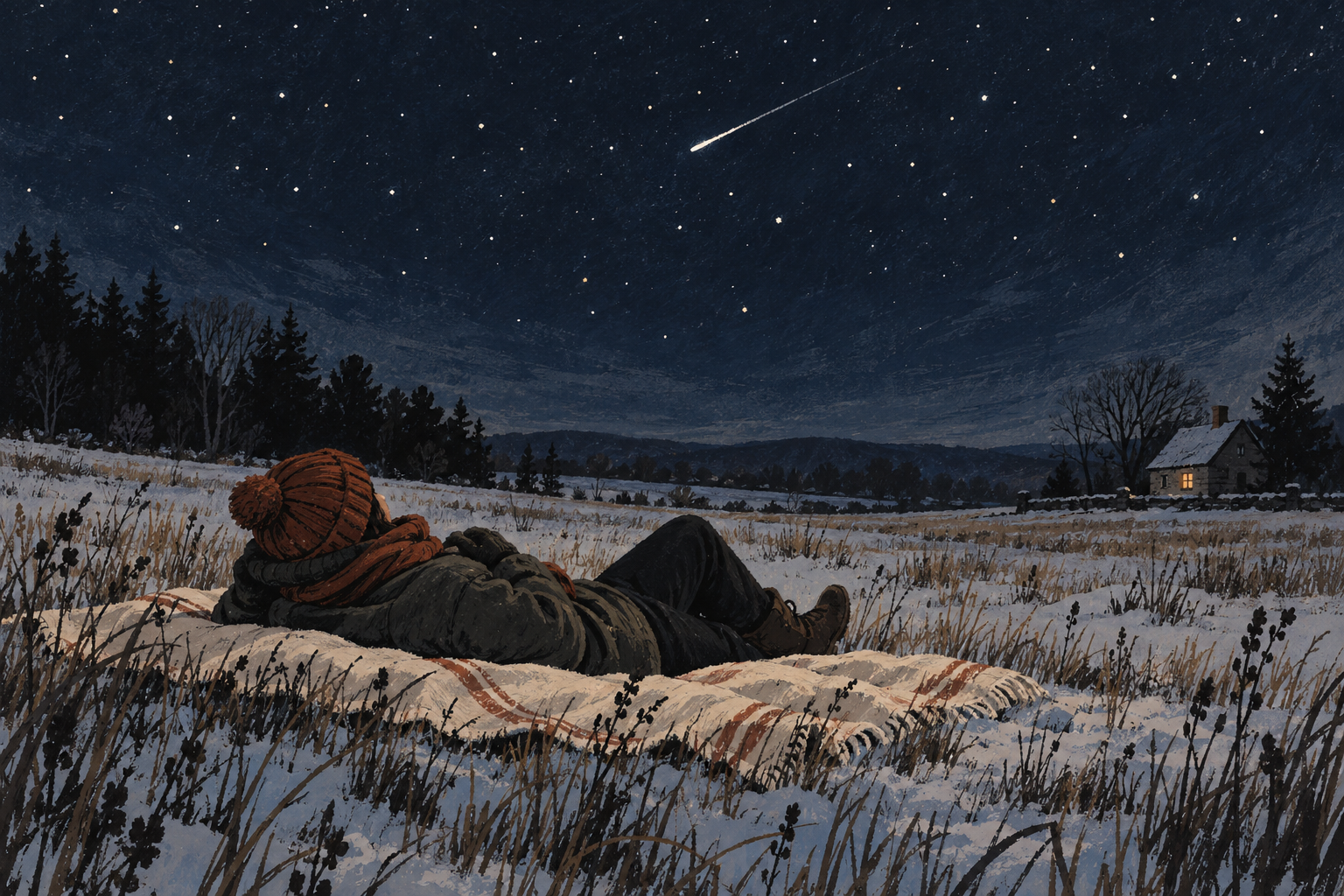
For casual stargazers arranging a cold-weather viewing night with friends or family in the Northern Hemisphere, the simplest plan is the best: choose one of the two strong December 2026 nights, find an open dark site, provide reclining seats and generous layers, then let everyone watch different parts of the sky. Keep the gathering short enough to stay comfortable, include an indoor warm-up option and treat cloudy weather as a reason to use your reserve night—not as a ruined event.
Choose a primary night and keep the other in reserve
Spain’s Instituto Geográfico Nacional places the Geminids’ usual maximum around December 14, within an approximate Northern Hemisphere season of December 4–17. Its 2026 outlook describes a broad maximum lasting about 12 hours, making both the night before and the night after the peak promising choices. The Moon should be about 20 percent illuminated and is expected to set early in the night.
Choose between those nights by convenience and weather rather than trying to identify one perfect hour. Make the night before December 14 your first choice if more guests can attend, for example, and reserve the following night for a cloud or wind postponement. Confirm the final plan with everyone on the afternoon of the gathering.
- Name a primary night, a reserve night and a decision time in the invitation.
- Ask guests to arrive fed and already dressed for an extended period outdoors.
Pick darkness, openness and easy retreat
The Instituto Geográfico Nacional recommends a dark location with few obstructions. It also advises watching without optical instruments that narrow the field of view, because Geminid meteors may appear anywhere overhead rather than only near the constellation Gemini. A telescope-free setup is therefore not a compromise; it suits the wide-sky nature of the activity.
Look for a legal, familiar place with a broad view and minimal direct lighting: a large garden, open field or permitted rural site could work. Prioritize straightforward parking, stable ground and a nearby indoor or sheltered retreat. Visit before dark if the site is unfamiliar, and identify gates, uneven areas and the route back to the cars.
- Position the group away from porch lamps, headlights and other direct glare.
- Tell guests exactly where to park and how far they will carry their chairs.

Build comfort around reclining, not standing
NASA’s general meteor-shower advice recommends reclining to take in as much sky as possible and bringing a sleeping bag, blanket or lawn chair for cold-weather viewing. It also notes that eyes begin adapting after less than 30 minutes in darkness. Use that settling period as part of the evening: arrange seats first, put phones away, lower unnecessary lights and allow conversation to replace constant checking.
Give every guest a supported way to look upward without holding an uncomfortable pose. A reclining garden chair with a blanket is ideal for some people; others may prefer a padded mat and sleeping bag. Suggest ordinary winter layers first, then add the playful astronomy element through a constellation scarf, planet socks, a space-themed hat or a suitably sized hoodie.
- Bring one reclining seat or padded ground setup per person.
- Pack more blankets than you expect to need, including extras for laps and feet.
- Set hot drinks on a separate table so spills do not reach blankets or chairs.
- Invite guests to face several directions instead of clustering toward Gemini.
Use a relaxed two-hour plan
A workable example begins indoors at 8:30 p.m. with drinks, a clothing check and a quick explanation that nobody needs to identify constellations or count sightings. Move outside at 8:45, arrange chairs and settle into darkness. Watch and chat quietly until about 9:45, then offer a 15-minute indoor warm-up. Guests who are comfortable can return outside for a final half hour, while anyone who has had enough can stay warm without feeling that they abandoned the event.
Set expectations in social terms: the goal is a pleasant night under a wide sky, with any meteor as a shared surprise. Avoid turning the host into a commentator. A simple call of “one over the trees” is more useful than asking everyone to stare at one named point.
- Keep the first outdoor period uninterrupted so guests have time to settle.
- Make the warm-up optional and leave outdoor seats ready for the second round.
Prepare a warm room and a no-drama fallback
Before guests arrive, create a small indoor landing zone with space for damp footwear, spare blankets and mugs. The warm-up activity should require no setup: serve a drink, put on a familiar playlist or invite everyone to share the best thing they noticed outside. Skip worksheets and observing logs unless the group specifically wants them.
If conditions are poor, choose between the reserve night and an immediate indoor gathering. A simple fallback could include snacks, a sky-themed film or game and five minutes outside whenever a clear gap appears. Send one decisive message rather than making guests repeatedly reassess the sky. The occasion still works as a winter get-together even when the astronomy does not cooperate.
- Check local conditions before guests travel and send a clear go, postpone or indoor-only message.
- Keep the second promising night free until the primary-night decision is final.
- Prepare the indoor room before going outside, not when everyone is already cold.
- End while the group is still comfortable rather than waiting for a dramatic finale.